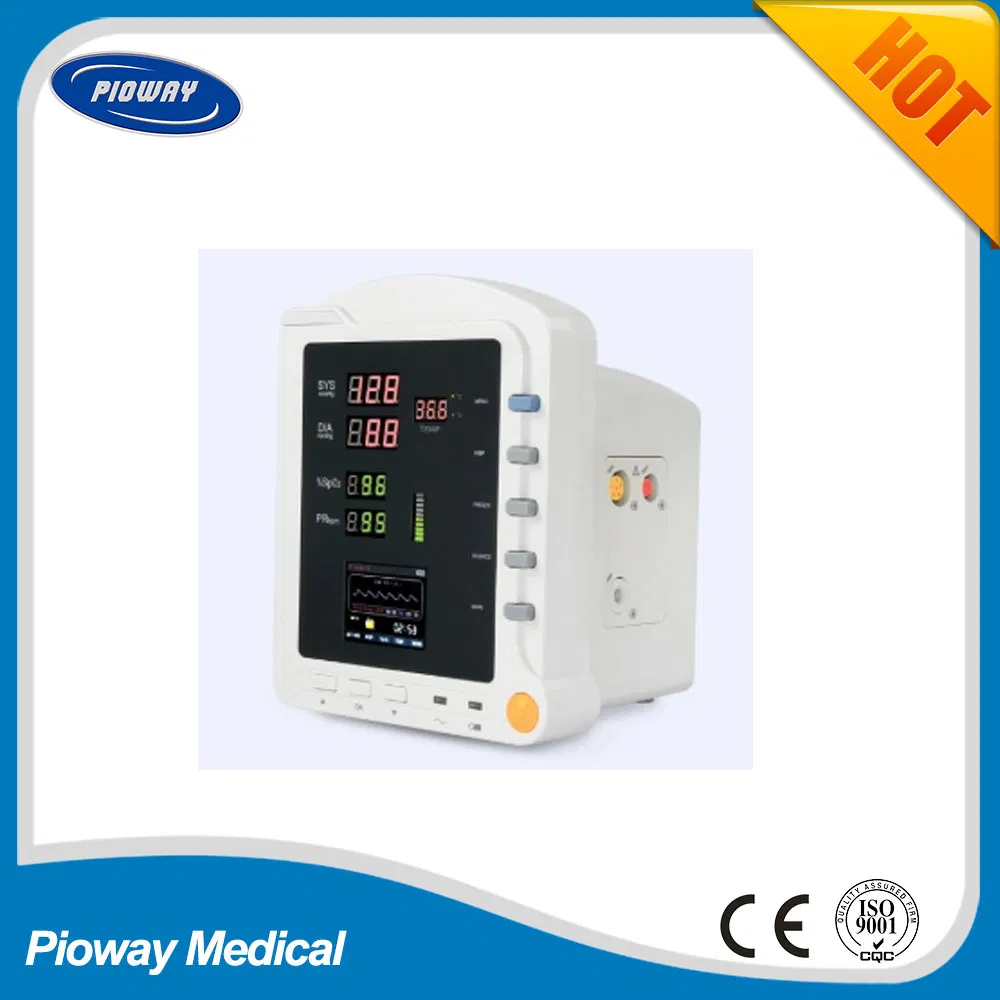
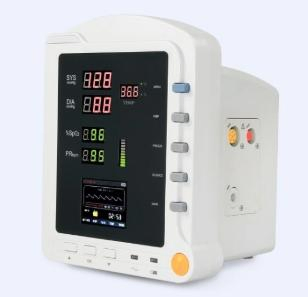
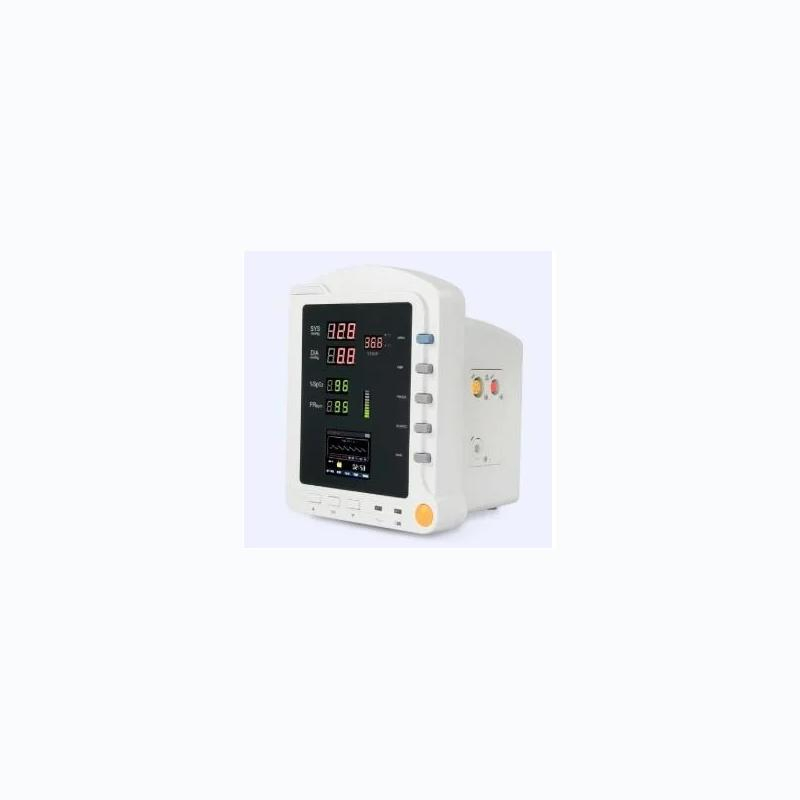
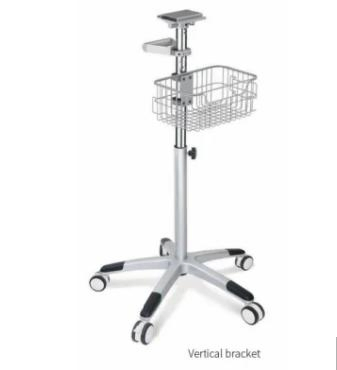
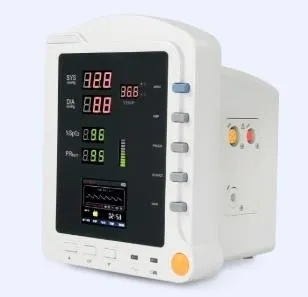
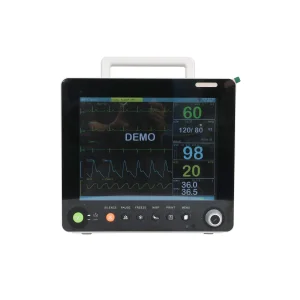
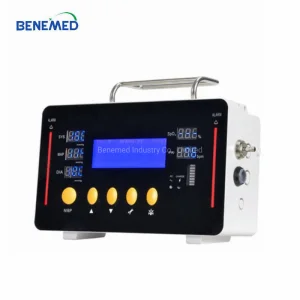
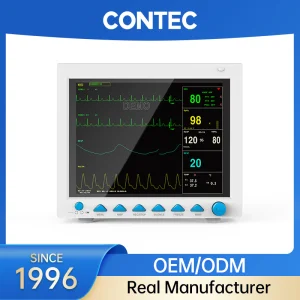
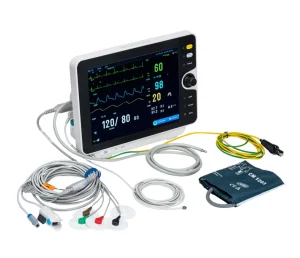
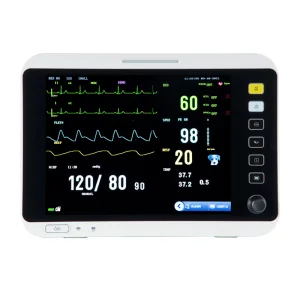
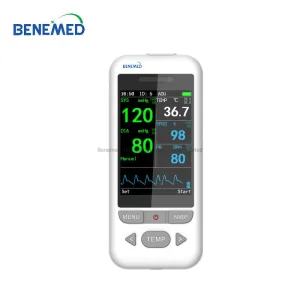
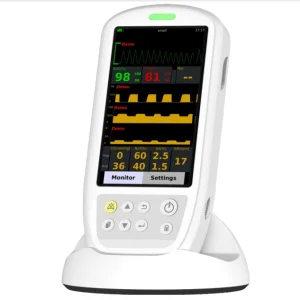
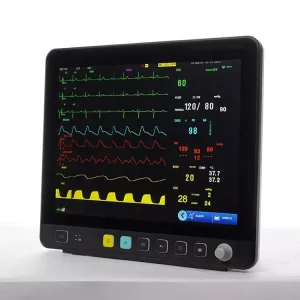
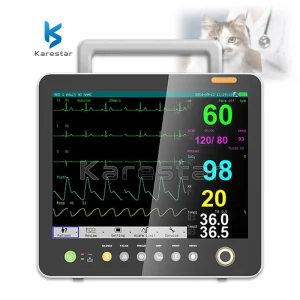
The CMS5100 Vital Signs Monitor is a feature-rich monitoring device applicable for adults, pediatric, and neonates. Users can select different measurement parameters based on clinical needs. This compact and lightweight monitor integrates NIBP, SpO2, PR, and TEMP monitoring, making it suitable for hospitals, community medical centers, and home use.
✔
Applicable for NIBP, SpO2 and TEMP monitoring of adult, pediatric and neonate of all ages.
✔
Suitable for surgery, operating rooms, ICU/CCU, emergency rooms, and obstetrics.
✔
Compact and flexible appearance, ideal for indoor and outdoor (ambulance) monitoring.
✔
Built-in rechargeable lithium polymer battery ensures uninterrupted monitoring.
✔
2.8'' (320×240) true color TFT LCD screen plus high-brightness digital tube display.
✔
Visual and audible alarms for SYS, DIA, MAP, SpO2, PR and TEMP with adjustable limits.
✔
Independent nonvolatile memory stores up to 2,000 NIBP, 7,900 TEMP, and 78,000 SpO2 data groups.
✔
Quick data review: 24-hour NIBP/TEMP trend graphs and 22-hour SpO2 trend graphs.
❓ Frequently Asked Questions
Which patient groups can use the CMS5100?
The device is designed for monitoring adult, pediatric, and neonatal patients of all ages.
What parameters does this monitor measure?
It monitors vital signs including NIBP (Non-Invasive Blood Pressure), SpO2 (Oxygen Saturation), PR (Pulse Rate), and TEMP (Temperature).
Is the CMS5100 portable for ambulance use?
Yes, its compact design and built-in rechargeable lithium polymer battery make it suitable for both indoor and outdoor monitoring, including ambulances.
How much historical data can the device store?
The nonvolatile memory can store up to 2,000 groups of NIBP data, 7,900 groups of TEMP data, and 78,000 groups of SpO2 data.
What kind of display does the monitor have?
It features a dual-display system: a high-brightness digital tube for core parameters and a 2.8-inch color TFT LCD for waveforms, trends, and settings.
Does it support alarm customization?
Yes, visual and audible alarms are provided for all monitored parameters, and the upper and lower limits can be manually set by the user.
 Medivara Medical